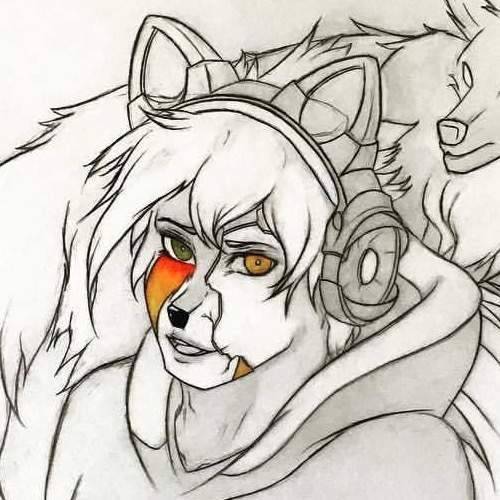
Gap Stories #18
[For Whom The War Is Fought]
Log Date: 10/17/12768
Data Sources: Unclear
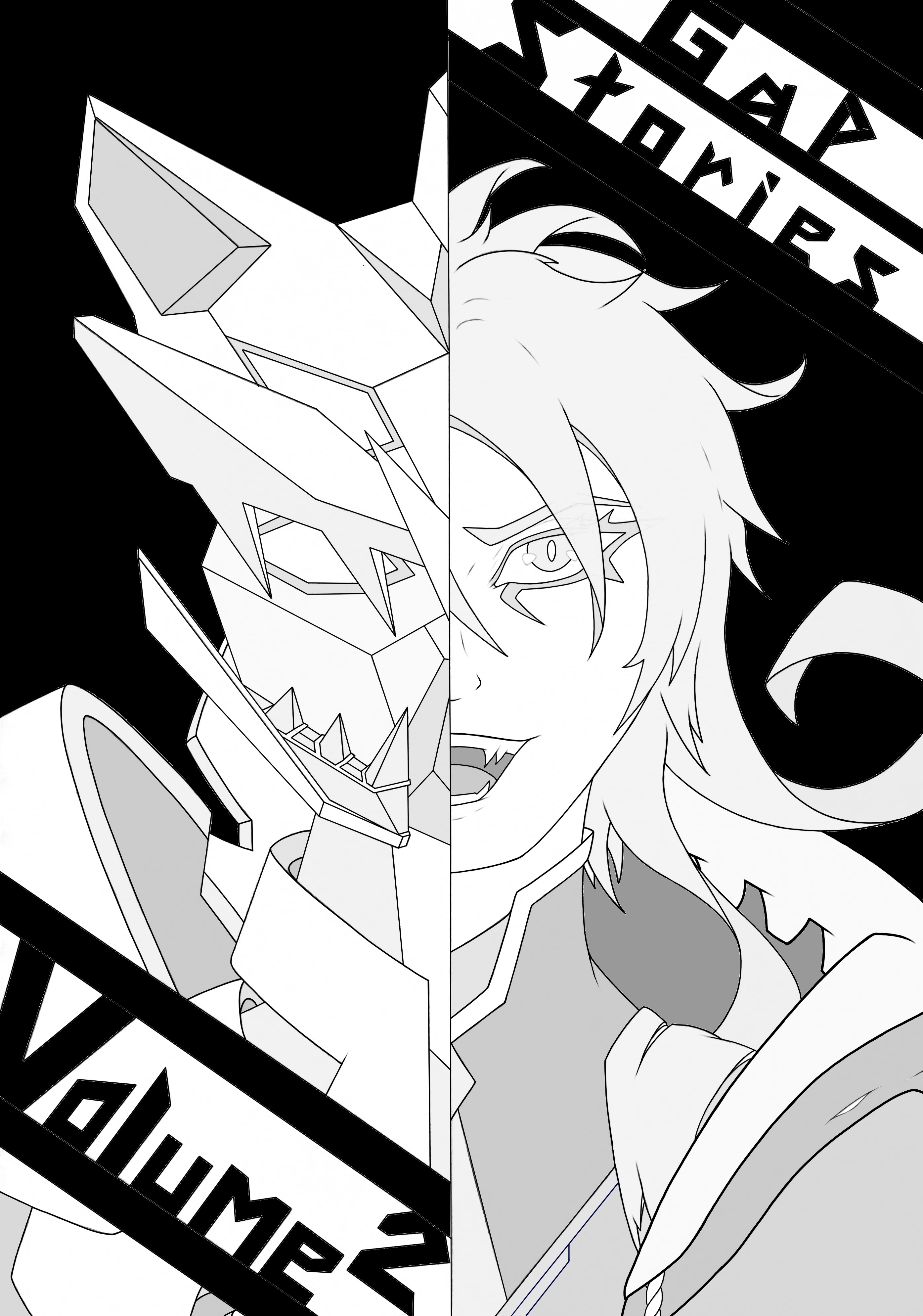
Gap Stories #18
[For Whom The War Is Fought]
Log Date: 10/17/12768
Data Sources: Unclear
Event Log: 10/17/12768
Noira: Targeshé Mountains
10:37pm SGT
“This is tedious.”
Kattunge does not respond to the remark. He knows it is intended to provoke a response from him, a lecturing response particularly. Which would turn into an argument, likely a fruitless one, that would go nowhere and waste both time and mental effort. The only purpose it might possibly fulfill was to entertain the one that was seeking to provoke the response, and Katt was not inclined to humor this desire.
Instead, the shroud of cats around his head continue to peruse the mountain range before them. The peaks here are worn and rounded by millions of years of erosion; vast forests have long since covered their tired backs, blanketing the entire range with a uniform sheet of green. Most of the slopes are at less than a forty-five-degree angle, and there are no sharp cliffs or jagged peaks. The nearest town seems to be miles distant, down in the foothills where the slopes start smoothing out into flatter lands.
“I thought a survey of the warfronts would be more engaging.”
“Is there no task which is equal to your pride, Krå?” Though he had fought it, he could not keep his retort in. Over the last few years, she had become rather adept at needling him at precisely the right points that would get a reply out of him. “You complain as much now as you did when we were tasked with evaluating Aurescuran tax structure. Surely our current commission is important enough to satisfy your ego.”
“I do not doubt the gravity of our commission. I doubt its ability to show me anything new, anything worth observing.” Beside him, Krå’s shroud of crows twitches fitfully around her head, their red eyes darting about as if they were searching for something else to lock their attention onto. “The soldiers here will die, as they always do, for that is the lot of a soldier. The survivors will return, scarred inside and out. And life will go on, as it must. This is the nature of war; as it was in the days of knights, so it is now in the age of stars. No matter the passage of millennia, the quintessence of war has not changed. And do not lecture me on the method, means, and motivation. You know that I speak only of the outcome, for in the end, the outcome is all that matters.”
“The motivations matter, for without them, there would be no war. And the method and their means are not without their importance.” Katt pauses at the shriek of strike fighters tearing by, racing low over the mountain range. Before they have passed over the flatlands, a line of explosions rip over the side of one of the mountains, flattening trees and setting others afire. “We must know the reality of war, in all its detail and nuance, so that we may shape its perception in the minds of the Aurescuran people. To undertake this task without the proper knowledge is a disservice to the Duty.”
“You tread ground which has already been trod, Katt. The path has already been walked. It may stray a little, here a little to one side, there a little to another, but the direction and the destination are the same as they have always been. You know this.” Krå starts, working on unbuttoning the cuffs of her sleeves. “The weapons may change, and so may the participants. But war itself remains the same. As it was at the beginning of time, so will it be at the end. The only things that differ are the names and the tools.”
“Very well. Shall we return to the Watchers and tell them we have completed our commission?” Katt offers. As always, there is no emotion in the words, so one could very well take it as a serious inquiry if they did not know the nature of the work.
But Krå knows the nature of the work, and now it is her turn to remain silent, seeking to avoid the response he wishes to provoke from her.
“We will continue our survey, then.” Katt concludes when there is no reply. “We will remain long enough to observe the assault the Venusians are about to mount against the Collective colony. After that we will move to the next world.”
“Once we complete this commission, you and I should observe something that is more compelling.” Krå states unprompted, her mind apparently on other things. “A sunset over the ocean, perhaps. Or maybe one of the newer holos that is currently in theaters.”
Unsure of what to make of that suggestion, Katt defaults to the reply which he has found is applicable in nearly every situation: “If the Duty permits.” Four simple words that hold true no matter the conversation and the circumstance; an axiom dependable and eternal. “Let us go forth, and see what form war takes in this modern age.”
“Different clothes, same body.” Krå murmurs, but nonetheless follows Katt. Both of them step from the overlook where they had been gazing across the mountains, and then are simply not there anymore. In their wake, there is nothing but the swaying of the evening trees, and the distant, echoing thunder of artillery.
The Aurescuran (Text-based News Outlet)
Opinion Section
For Whom The War Is Fought
I begin this letter with a few key facts that the reader will need in order to understand the subject I am about to discuss.
First, there is a galactic war underway. Officially, it encompasses roughly a dozen systems across multiple nations. Unofficially, there are combat fronts, big and small, in at least thirty systems.
Second, the army of the Aurescuran Republic is involved in a few of these fronts.
Third is a report from the military’s enlistment office showing that recruitment is below replacement levels needed for an active conflict, and that public respect and regard for military careers is at its lowest point in decades.
Fourth, I am a retired general of the Aurescuran military.
Over the last few months, I have seen much discussion among our people about the role and perception of the military. There are many who view it as a way for the poor to escape poverty without having to pay the cost of a higher education. There are many who disdain it as a career for those that lack the intelligence to work in other industries. And there are others who view it as an inherently flawed and distasteful institution, because of its role in ill-considered regime changes of smaller nations.
I am not here to say those perceptions are wrong, because they are not. The military is indeed a path for the hardworking poor to escape poverty, and I believe that is a good thing. I agree that it is a career that does not encourage independence and questioning authority, and I would not change that. The military relies on the discipline of the chain of command; without it, our armies would quickly fall apart and we would lose far more battles. And yes, the military has been involved in crusading adventures at the behest of ambitious politicians, and it has tarnished the reputation and dignity of the institution. This brings me to the tip of my message, a reminder for the public and the politicians that seek to move them:
The military is not a tool for politicians or politics. It is one of the core institutions of our nation, in the same way that the courts are, established to serve a singular purpose: the defense of our nation and the protection of her interests.
I say this because over the last two decades, I have witnessed an erosion in this understanding. Since the fall of the Challenger program, I have watched as our prime ministers have gradually stopped treating the military as a tool of the nation, and begun to view it as a prop for their political ambitions. Just this past week, we saw a pointless military parade through the streets of Goldenbirch — a breathtaking waste of time, resources, and personnel at a time when there is a galactic war in full swing, and those resources and personnel would’ve been better utilized elsewhere. The prime minister claims he ordered the parade to celebrate the founding of the Aurescuran military; a parade that just so happened to fall on the prime minister’s birthday. Something was being celebrated, I’m sure, but it was not the military, or the men and women that dedicate their lives to the defense of our nation.
It is actions such as this — undertaken for the ego of a single man while pretending to honor the sacrifices of countless soldiers — that puts our military in the position that it’s currently in. Disrespected by our own civilians, mistrusted by the public, it’s no wonder that the military is struggling to meet its recruitment quotas — and in the middle of a war, no less. Something has gone terribly wrong if a military, in the middle of a generation-defining war, cannot recruit enough young people to remain fully staffed. It speaks to a rot that runs deeper than the current moment; we did not arrive to this point suddenly and without warning. This crisis of credibility was years in the making, the malpractice of multiple prime ministers and their parties, seeking to maximize their political power at the expense of the other core columns of our nation. We have seen this with the courts as well, whose reputation has been slowly disintegrating with each protracted political battle over replacing a supreme justice. The damage only deepens with the continued politicization of what are supposed to be nonpolitical institutions.
Nowhere is this more evident than in the responses received on a military perception survey conducted among the youth of Aurescura. This survey was part of a report commissioned by the Aurescuran military’s enlistment office, conducted by a third party so as to protect the results from the contamination of bias. And it found — perhaps unsurprisingly — that a large portion of the responders had negative impressions of the military. Though their reasons varied, each answer tied back, in some shape or form, to the politics of the military.
Event Log: 10/18/12768
Velennia: Atrugaia Central Hospital
8:21pm SGT
“I have seen it all before.”
It was meant to needle him, he knew that. It was so brazenly egoistic, so unrepentantly callous, that there could be no other purpose. Not for someone of her intelligence. And knowing this should’ve provided the context and awareness he needed to ignore the provocation.
And yet.
“This will be a very long commission if you insist on trying to vex me.” Katt states as they exit the hospital in Atrugaia. “If you do not like the task we have been given, you would be better served by helping me speed it, rather than introducing unnecessary friction.”
“Nothing was achieved by this visit other than confirming what is already known about the costs of war.” Krå replies, as the two of them come to a halt somewhere between the main entrance and the drive-through dropoff. Those entering the hospital, whenever their path would have them intersect with the Faceless Ones, are taken by an unexplained compulsion to adjust their trajectory, never once looking at the spot they had avoided. “The mangled bodies, the amputations, the mental traumas. I have seen it; you have seen it. More than that, we have both experienced it. Both of us had multiple lives as soldiers during the years of the Cycle; you and I both know the cost of war. There is nothing new here. If anything, it is relatively staid compared to the horrors that we both experienced during the Cycle.”
“The severity of our suffering does not discount the validity of the struggles they now face.” Katt replies, the golden eyes of his cats tracking the fading glow on the mountainous horizon. “We must be judged in the context of the time in which we lived; not by the measure of an era we never knew. The people of today did not live in the time of the Cycle; therefore, we will not be holding their struggles to its standard.”
“Perhaps you might not. I am not so generous.” Krå states, the crimson eyes of her crows examining her trimmed and unadorned nails. “Comparison is a necessary function of history. And measuring is a necessary element of comparison.”
Katt’s pale lips draw into a tight line, knowing that there is validity in Krå’s assertion. “I will allow comparison as a means of perspective, but not as a tool of judgement.”
“One of many things you allow me only reluctantly.” Krå remarks, some of her crows shifting and twitching along her head, their wings shrouding much of her face. “Is our time here concluded? You have seen what you already knew to be true; you have ascertained that the cost of war is the same as it was when we are mortal. Unless I am blind, there is nothing else here for us.”
Though part of him is impelled to oppose Krå, he subdues it. It would be an act undertaken out of spite for her impatience; as satisfying as it might be after her continued impertinence, it would mean yielding to an emotional impulse. And angels, at least as far as the Old City was concerned, did not have emotions. “We may depart now, if you are ready. I believe we have ascertained all we need here.”
Something about that toneless accession seems to annoy Krå, and she faces towards the fading sunset. “I would find you at the end of existence as the last stars sputter and die, simply watching it come to pass.”
“If that is what the Duty required, then yes, I would bear witness to the end of all things.” Katt answers with a certain factuality, devoid of all emotion. “I am ready to go forth when you are.”
“Would that you would be ready for more than that.” Krå mutters before squaring her shoulders. “Let us go.”
And like that, they are gone, without a trace or sound, as if there had never been anything there at all.
The Aurescuran (Text-based News Outlet)
Opinion Section
For Whom The War Is Fought (continued)
The politics of the military. It’s a terrible phrase, one I despise, because it encapsulates everything that has gone wrong with our nation’s governance over the last twenty years.
The military is not a political institution. If you take nothing else away from this article, take at least this one truth with you, because it is one that both the public and politicians need to hear and understand. The role of the military is to protect and defend the nation. They do not create and pass legislation; they do not adjudicate matters of law; they do not try to shape public opinion and culture. Most importantly, the military is not the tool of an individual. It is the tool of the nation, to be used wisely and sparingly by the leader of the nation. The military is not loyal to the prime minister, and it is not loyal to the party; it is loyal to the founding documents that grant the prime minister their power. It is an important distinction that many politicians have lost sight of in recent years as they seek to leverage the military population as a political tool, both in and out of uniform.
And as we are now seeing, that has cost the military their next generation of recruits. One takeaway from the survey was that the younger generation sees the military as an inherently traditionalist institution; youth across the galaxy tend to lean futurist. What person would join the military when the military as an institution seems to stand in opposition to your beliefs? Similar to watching a show you hate, or purchasing a food that you do not like, it is something that people simply will not do, especially when there are other, more enjoyable options available to them.
Which leads us to the next conundrum discovered by the survey: our young people have options — better options. Even among those that were sympathetic to the military and drawn by its mission admitted, with very little hesitation, that the main thing keeping them from joining was the question of compensation. It is well-known that being a soldier is not lucrative, and I do not think it needs to be lucrative — but it must be reasonable, reliable, and stable. If men and women cannot support their families on a soldier’s pay, then it strips away all of the pride that the career should afford them. There is no dignity in protecting your nation if it does not let you provide for your loved ones.
Though I say that as if our youth are inspired to give their lives in service to our nation — you may already know this, but the results of this survey make it quite clear that many of them are not. Many would attribute this to a selfish generation, egotistical and interested only in themselves. I have seen a considerable number of articles taking this point; I have seen a similar number of interviews and round tables excoriating the youth for the same. After meditating on this apparent issue for some time, I will say that I am not qualified to remark on the broader cultural issue. But where the issue relates to the matter of the military and serving one’s country, I will say this: perhaps the reason why so many of them are unwilling to risk their lives for their nation is because we have not given them anything worth dying for.
I say this as an open rebuke to our elected leaders, who have, in recent years, adopted an unrepentant style of governance. Scandals that might’ve once felled the mightiest of politicians are now brushed off; indiscretions and corruption are now viewed as hurdles to be cleared, instead of the end of the line. I cannot even begin to list the number of politicians that have used their offices and access to information to enrich themselves; and after they have left office, continue to leverage connections to continue padding out luxurious lifestyles. It has become plainly clear to myself and much of the public that the integrity of the legislative branch has diminished greatly since the fall of the Challenger program. Not all politicians are guilty of the flaws listed here, but the guilty share has risen sharply in the last two decades, and will continue to rise unless we begin demanding accountability for these moral failures.
And so, taking this into account, is it any surprise that the next generation feels that they owe nothing to their nation, least of all their lives? Our elected leaders used to be people that we looked to as exemplars, who embodied the best traits of our communities, who were the guardians of the nation’s values. They were people who understood the value of sacrifice and service, and the importance of putting aside individual needs to serve the greater public. They understood that it was their role to inspire, reassure, and to lead. They knew that democracy was a project that relies on the foundation built by previous generations, and that there was an obligation to do good work, so that the next generation could pick it up and continue improving on what came before.
Event Log: 10/19/12768
Losinadae Ring: The Hammer of Dawn
5:20pm SGT
“It still galls me that we knew this would happen, and let it come to pass regardless.”
This time Katt cannot tell whether the remark is bait, or if it is a feeling sincerely held. It is entirely possible that it could be both; Krå was quite capable of pursuing multiple ends through a single means. Still, knowing the gravity of the topic that is being raised, it seems better to acknowledge it, rather than trying to feed it to the silence.
“If the Watchers willed it so, there was a reason.” Katt replies as the eyes of his mantle gaze up at the ruined firing mechanism of the Hammer. The scaffolding that once held the Shyl-tari relic and the Dragine artifact is empty; there are scorch marks here and there from the confrontation the Valiant had with Makalu some three years prior. “There is purpose in all things we are ordered to; you know this.”
“Purpose in genocide.” Krå mutters, stepping up the platform to the firing array, her birds cocking and turning their heads to examine the warped and twisted metal. “And yet if we would ask, we would not be told what it was all for. Expected to follow and obey blindly, trusting that it is all for the benefit of the Duty, regardless of how bloody the cost may be.”
“You would doubt the integrity of the Watchers?” Katt asks sharply. “Or worse, the integrity of the Witchling herself?”
“If I did, it is only their fault, for withholding answers.” Krå retorts, gingerly skimming her fingers over the ruined firing array. “I would have no reason to doubt if they were forthright.”
“There are some things that some people are not meant to know. You have never learned this.” Katt states as one of his cats leaves his mantle, and another slinks over the platform to replace it. “This is why you were chastised for showing Maugrimm’s memories to the witch boy we were charged with protecting. If the Watchers have refused to tell you the reason for letting the Collective genocides come to pass, it is because you have proved that you cannot be trusted with that information.”
“Perhaps rightly so. Had I known more, I might’ve acted on it.” Krå continues muttering as she drops her hand from the firing array. “It was not just the genocides alone. They must have known what would follow. Ergo, they must have wanted this war.”
“Perhaps. We cannot know the mind of the Witchling or the Watchers.”
“We could, if they would tell it to us. But they refuse, and in so doing, sow the seeds of disloyalty.”
“You cannot exonerate yourself by trying to shift the blame for your misconduct onto your superiors.”
“I need not shift the blame. They already have plenty upon their heads for having let those genocides come to pass.”
Finding himself dangerously close to expressing exasperation, Katt shifts the conversation in a bid to deescalate the emotional level. “Is there anything to be learned of this weapon, and its mechanism?”
“Clumsy.” Krå says, but does not elaborate on the sentiment, and proceeds before Katt can inquire. “There are traces of the Dragine and Shyl-tari here. A forced union, one that was founded on a brutish, inelegant understanding of the two devices. This is not how they were meant to be used, and it was inefficient to do so, at least by the standards of the Shyl-tari and Dragine. But it was more than sufficient for the ones that commissioned this weapon.”
“And of the consequence for the people of Aurescura?”
“No consequence except that which you already know, and which is already commonly held among Aurescurans. Such weapons should not exist, for their existence alone invites their use.” Krå says, turning from the warped array and making her way back down the platform. “Also that their existence is particularly existential for smaller nations whose sum population is contained across only two or three worlds, as is the case for the Aurescuran Republic.”
“Then the current perception of these weapons requires no adjustment, and may instead be reinforced by affirmation.” Katt says as Krå rejoins him. “And of the key components themselves, a reinforcement of the belief that the detritus of the Dragine and Shyl-tari should be treated carefully, considering the role that such leftovers played in the creation of this weapon.”
“Those that play with the devil’s toys shall be brought by degrees to wield his sword.” Krå replies, tugging at her skirt and straightening it somewhat. “The corrupted Prophet is living proof of this precept.”
“Living, for now. His hand in this is not ignored; he will know the rebuke of the Collective, sooner or later. They are patient, and their memory is long.” Katt states, his cats eyeing the buckled portions of the firing tube where Collective biomass has slowly forced its way into the weapon’s superstructure over the past few years. The battle over the Losinadae Ring still continued to this day, with the Collective having claimed chunks of it while the Confederacy continued to fight back against their intrusion. “But our people will have no hand in that; it will be a task for others. His fate is of no importance to the Duty.”
“So you say. Allow him to roam free long enough, though, and he will eventually become our problem. A rabid dog is an issue for everyone in the neighborhood, regardless of whose lawn it’s in.” Krå says. “It’s better to solve the problem before it ends up in your yard.”
“The Watchers will order his destruction if they deem it necessary. Until they do, the corrupted Prophet is not our concern.” Katt replies, refusing to be moved on the matter. “I believe we have ascertained all that we came here for. Are you prepared to depart?”
“With a heart yet unsatisfied and a conscience troubled; but yes. Let us be on our way.”
And with that, the two angels are simply not there anymore. In their wake, there is only silence, and the intermittent thunder of artillery on one of the ring’s many battlefronts.
The Aurescuran (Text-based News Outlet)
Opinion Section
For Whom The War Is Fought (continued)
That is not what I see when I look at today’s leaders.
I see men and women who place personal profit over the welfare of their constituents. I see candidates who make impossible promises during the campaign, knowing full well they will be unable to deliver on them, though the voters are too ill-informed to realize that. I see representatives that spend the entirety of their term making connections that will help them pivot into lucrative roles in the private sector. I see career politicians using the legislative process to reward themselves and strip away the rules and regulations meant to protect them from their own greed. I see ideologues wielding the arcana of the law to crush opposition and destroy compromise on misguided crusades to advance their beliefs regardless of the damage it does to the national unity. I see demagogues vomiting out an endless stream of lies and vitriol, poisoning and dividing our people.
These are our leaders.
Why would our young people want to protect any of this? Nobody in their right mind would lay down their life to preserve this. Nobody looks at this and thinks to themself that this is the system they want to protect. This does not inspire loyalty in the public or pride in the nation. This is not something you can look towards, and tell yourself that it is worth risking your life to defend this system.
So it does not surprise me to see that so many of our young people are not willing to die for their nation. The moral quality of our leadership has declined considerably, and there are very few people that enjoy taking orders from a bankrupt, three-time adulterer that managed to squirm his way into the nation’s most powerful role on the ignorance of people that are fooled by his lies. Even fewer are the people that would be willing to die for such a person, or the cadre of grifters he has brought into power with him. So long as the quality of our leaders remains at this level, the military will struggle to find recruits that are willing to take orders from these people, or die in the service of their agenda.
Event Log: 10/20/12768
Sunthorn Bastion: Central Operations Room (COR)
8:39am SGT
“My personal preference is that we invest in our existing forces, rather than continuing to recruit during our rest period here.” Forecast says as he examines the holoarray documents splayed in the air before him. “I understand that a larger staff will enable us to undertake more missions simultaneously, but the quality of our staff matters as well. I’m of the opinion that one job well done benefits the reputation more than two jobs poorly done.”
“It also costs less to give an employee a raise than it does to hire an entirely new employee.” Valkyrie adds, arms folded as she scans over the Valiant roster. “If we can tie pay levels to certain skills and responsibilities, we can encourage existing staff to rise to those requirements, instead of just throwing more bodies at the gaps in our roster.”
“Hate to break it to you, but the math ain’t that simple.” Drill says, sitting up slightly in his hoverchair. “Technically yes, raises cost us less than new hires, but only if we’re at an operational plateau. Say we hire on another thirty people and that allows us to expand our operational range by about twenty percent. It costs more, yeah, but you also can’t get that extra twenty percent just by giving your existing staff raises. Not without workin’ some of ‘em to death.”
“Do we really need to keep expanding in this environment, though?” Valkyrie asks. “I know that it’s a good environment for recruiting — people are fired up and ready to get involved in organizations that make a difference. And nothing makes a government open their wallets like a war. But at some point, the war is going to wind down. The funding’s going to dry up, and if we’ve grown too large at that point, we’re going to have to let people go as we shift to a peacetime posture.”
“The raised points are valid.” Kaiser states, his elbows resting on the arms of his chair while his fingers are laced together in an arch before him. “The war will end eventually. The Valiant’s growth must follow a trajectory that will be sustainable after the last shots are fired. But at the same time, the reputation and profile we create for ourselves during this time will be directly correlated to the size of our role after the war. This war is a unique chance to expand and solidify our presence on the galactic stage, and it will be another several decades before such a chance arises. Expanding our operations now, and in a judicious manner, will be an investment in the future of the Valiant.”
“CURSE is doing the same thing. They aren’t sittin’ on their hands.” Legaci adds, her hologram flickering slightly as she splashes a set of reports across the room to the other members of Valiant Command. “They’re consistently deploying assets across multiple battlefronts in the Collective campaign, and they’re actively recruiting to make up for any staff they lose through combat or career attrition. Obviously they can’t deploy like a real army, but they’ve been undertaking surgical strikes at flashpoint conflicts, and reinforcing local militaries on invaded worlds. They’re using this war to buff out all the dents and scratches their reputation picked up after the Nova Incident, and I hate to say it, but it is working. Perception polls show that they’re slowly climbing back out of the hole that Nova dug them into. So if we want to compete with them once this war is over, we need to get our footing now. We need to make ourselves more valuable to the galactic public than they are, or they’ll go right back to attacking us when this all blows over.”
Valkyrie blows out a sigh through her nose. “That doesn’t have to be the case. We managed a truce on Losinadae; perhaps we can do something similar once the war is over. If they even want to keep fighting; this whole mess has been going on for three years, and who knows how much longer it’ll go on for. I don’t think they’ll want to throw themselves into another fight after it finally ends.”
“CURSE’s rank and file probably won’t want to keep fighting. Their leader, on the other hand…” Forecast muses.
“I hate to say it, but he’s got a point.” Drill grunts, sitting back in his chair. “That girl doesn’t know when to call it quits.”
“I mean, we could just get Songbird to beat her senseless again.” Legaci mutters. “If the ass-whoopin’ doesn’t get her to back off, then the public humiliation might…”
The conversation continues on, following the many logistical difficulties of arranging a second encounter between Songbird and Nova. Katt and Krå, standing unseen on the edge of the room, continue to observe the circle of commanders as they work their way through the various and sundry problems of leadership. It is apparent that Katt is thoroughly engaged in the discussions that are being held; his mantle of cats have their golden attention fixed on the circle. Krå, on the other hand, is betrayed by her crows, whose attention is very clearly wandering, gazing in multiple directions at once.
“I had not thought that you could make war boring, but this group has managed it.” Krå exhales. “I doubt much more will be attained by seeing this convocation through to the end.”
“We are not leaving. We were sent here to observe what judicious leadership looks like in a time of instability.” Katt answers, the eyes of his mantle remaining fixed on the group. “Inspiring, it may not be; but this Command may act with more integrity at their core than many other institutions do. It is an example that the people of Aurescura may sorely need in the coming years.”
“If you would inspire our people, there are more dynamic examples on the planet below.” Krå says, gesturing to the floor beneath their feet. “Pilots that risk their lives in behemoth battles against the Collective’s monsters. Surely this inspires the heart more than milquetoast discussion of recruiting quotas and operational plateaus.”
“I do not deny that there are valorous warriors on Halcyon. But our focus here is not warriors; it is leaders.” Katt answers. “And the choices and actions of leaders are just as important, if not more so, than the warriors they command.”
If Krå rolls her eyes, it cannot be seen behind the shroud of crows about her head. “All of this so that an old man on New Aurescura can be inspired to excoriate the conscience of a nation through words he has put to the page. Surely there are better avenues through which to turn the hearts of our people.”
“It is not our place to question the commands of the Watchers, which you seem to be doing with greater frequency of late.” Katt states, taking care to bleach any hint of emotion from his tone. “There is purpose in all things the Watchers order us to. If this is the method that the Watchers have elected, then it is for a reason.”
“Then there is something to be said for how obtuse the method is.” Krå says. “There are a myriad of other figures in Aurescuran culture that—”
Whatever she had been planning to say is lost as both angels are rocked by a sudden jerking sensation, as if a wave had passed through them, and pulled them with it. Both of them stagger, finding their feet, only to discover they’re no longer in the COR, and are standing under one of the picnic pavilions outside the central tower. They have just enough time look at each other before another wave of intent passes through them, setting them staggering again; and when they have regained their balance, they find themselves next to a clear pond in the center of a grassy hollow, nestled into the center of a glade.
“We have been moved.” Krå states, the eyes of her crows darting around frantically as they take stock of their new surroundings. “Something… something moved us.”
Katt’s mantle is likewise twisting around his head in a bundle of puffed tails and slit pupils, taking note of the single flower floating in the pond, and the warped tree growing next to it. “To move us, it would need to be aware of us. There is something here that can see through the occlusion of our mantles.”
The rustle of leaves instantly draws their attention to the hunched tree beside the pond; there in the shadow of its branches, something moves. Bright green eyes, slinking along one of its thick boughs. “I knew I smelled cinnamon and coals. You must be Maugrimm’s little ones.”
Katt can feel Krå’s hand clamp around his wrist, the world around them blurring into a swirl of colors as she wills them away from the hollow. But the swirl stops short of those bright green eyes, which seem to act as an anchor for reality; eyes that Katt’s mantle seems unable to look away from. Colors and shapes slowly begin solidifying and taking form once more, moving outwards from those vivant eyes, untwisting the warping of reality back to the way it was before Krå tried to bend herself and Katt through space and time.
“Katt! Look away from it!” Krå hisses, jerking his arm. “By acknowledging it, you are allowing it to ground us here!”
Krå’s exhortation provides what he needs to tear his eyes away from the twin rings of green light, and as soon as he does, everything blurs around them, nearly instantly resolving into a nondescript patch of forest. He shakes his head, as if finding himself disoriented, and plants a hand on a nearby tree to steady himself. “Why did you not let us stay, to see what it was?” he inquires.
“Did you not perceive it?” Krå retorts, bracing on her knees as her agitated crows flutter around her head. “It was a presence beyond that of the Watchers, older than even the Witchling.”
“You felt fear.” he states; a simple observation, but one that brings the alacrity of her reaction into sharp focus.
“Chasten me for my emotions later; this was as far as I was able to get us while you were acting as an ontological deadweight.” Krå says, straightening up and making her way over to him. “We are still in the glade. I will need your concurrence to move us to a safe location beyond the reach of this being.”
“Adorable.”
Both of the Faceless Ones startle, twisting around to see a red panda Halfie standing just behind them, hands tucked in the pockets of his hoodie. The incandescent green eyes are unmistakable, pressing down on the pair with the weight of a looming, ominous curiosity. “I do hope you weren’t planning on running off without a word. I’m very interested in why the Old City is snooping around on one of the Bastions.”
Katt feels Krå grab his wrist again, and this time he doesn’t resist as she pulls him with her. The world around them starts to blur, but is suddenly interrupted by the sensation of being snagged — like someone hooking their finger on the collar of your jacket and jerking you backwards. Except this feels like someone hooking a claw in the very fabric of their being, stripping away their ontological invisibility and pinning down their presence in this moment and location. Both of them stagger backwards, pulled by the unseen force of will, and Katt can sense Krå panic beside him; she twists around, reshaping reality around them into a version where a dead tree has finally met its limit. Nearby, a rotten husk of termite- and beetle-infested lumber cracks and topples over, sufficient to crush the hoodied Halfie accosting them.
But he puffs a single lock of moonwhite hair from his scintillating eyes, and with it another ripple travels across reality. The angle of the deadfall shifts ever so slightly, a lazy nudge that has the rotten trunk crashing to the forest floor just behind him, crushing undergrowth as it bounces slightly, cracking and breaking at one point along its length.
“Now what’d you do that for? That was a perfectly healthy tree before you killed it.” he says, not waiting for an answer as he takes one blackfurred hand out of his hoodie pockets. He makes a sweeping motion, as if he was wiping a damp rag over a window to clean it — and in that gesture, strips the mantles from both of the Faceless Ones, leaving them void of the cats and crows that once shrouded their heads. That simple action reveals a young man and woman with black hair, the first one tousled, the second with locks that spill past her shoulders.
They do not handle this particularly well.
Both of them are immediately crippled, the young man crying out as he recoils, trying to block the morning light from eyes that have not been used in millennia. The young woman, on the other hand, clutches a hand to her chest as she folds to her knees, mouth hanging open as she struggles to relearn the act of breathing. All semblance of their angelic neutrality has been stripped from them, leaving them very much mortal, and very much susceptible to their emotions.
“Mmmm. Tasty.” the Halfie remarks as he studies the reeling angels. “You two have been doing the angel thing so long that you forgot what it’s like to be living. Honestly not a surprise, with the way Maugrimm organized things… you get more mileage out of enactors that don’t have emotions or mortal needs.”
“What did you do to us?” the young woman gasps, gripping her throat as she still struggles to breathe.
“Set you free, even if it’s only for a little while.” he says, returning his blackfurred hand to his pocket. “I think I’ll leave you like this; it’s much more… nourishing for me. And I would like to see how far a taste of freedom goes in corrupting Maugrimm’s little worker bees.”
“You can’t do this to us; we’re angels of the Order.” the young man pants as he feels around on his knees and one hand, using the other hand to cover his eyes. “You’re interfering with the affairs of the Old City…”
That merely prompts a faint chuckle from the Halfie. “If Maugrimm has a problem with it, she can come talk to me. And I would welcome it; it’s been a while since I’ve spoken with… well, my almost-granddaughter-in-law. Family is such a tangled thing…” His banded tail lashes as he stares down at the staggered angels. “Stay a while, won’t you? Perhaps I’ll lock you two in a room together, spark a little bit of character development with some involuntary proximity… and perhaps this can serve as a reminder to the immortal community to tread lightly whenever they want to snoop around the Bastions. You really ought to have visited the Reflection House instead; manners would’ve kept me from messing with you there…”
A soporific sensation steals over both angels as the hoodied Halfie continues speaking, his words seeming to wrap around them like a thick, soft blanket. Apparently realizing what’s happening, the young man tries to stand, but only makes it a few steps before he’s falling back to his knees again, while the young woman slumps over on the dead leaves. It isn’t much longer before he does the same, his hand falling away from his eyes as they fold shut.
And then there is only darkness, and sleep.
The Aurescuran (Text-based News Outlet)
Opinion Section
For Whom The War Is Fought (continued)
We must give our youth something worth fighting and dying for, because what we are offering them now is not remotely defensible. We must give them leaders that inspire and serve selflessly, instead of laboring for their own benefit. We must pursue a government and policies that serve the greater good of the nation and the public, instead of the pocketbooks of the elite. We must be champions of the principles our nation was founded on, so that when we go to war, it is with a sure moral footing and a determination to do what it is right — to defend the defenseless, to lift up the oppressed, and stand as an example to the rest of the galaxy. We must give them a nation that is worth defending, worth dying for.
As I was going through the survey that was commissioned by the enlistment office, one of the responses from the survey population caught my attention. It was a reply to an open-ended question about what the survey participants found the most concerning about the military. Many replies cited the current politics of the military, or an aversion to being involved in immoral or unjust military campaigns. But the reply that caught my attention cited none of these things — it stated simply that they wouldn’t join simply because they didn’t know who or what they would be fighting for.
I have thought back to the days of my recruitment, now some forty years ago, and asked myself if I knew who and what I would be fighting for when I signed my papers. I realized that even if I did not know the prime minister in office at the time, or what their agenda was, I still knew who and what I would be fighting for. I knew I would be fighting for my family and my friends and my little town of Marrowen. I knew I would be fighting for Ms. Coray, the old witch down the street that always helped my mother with tonics when the children were sick; I knew I would be fighting for Mr. Briggerton, who taught me math and showed me that I was smarter than I thought I was. I knew that I would be fighting for Mrs. Havers, who always shared her produce with the rest of the neighborhood; I knew I would be fighting for all of these people that made our town a good place to live. And over my career, whenever I found myself uncertain or unsure of what I was doing, I would always think back to Marrowen to remind myself why I had signed up. It was not to fight the wars of politicians, but to protect the people and places that I loved, and that I hoped to return to one day.
That is what we have lost, and that is what we must regain. To always remember for whom these wars should be fought — not for politicians or political parties, but something more, something bigger than that. For your neighbors, for your family, for your community, for a better world.
That is for whom the war is fought.
Event Log: 10/20/12768
Sunthorn Bastion: Guest Apartment
8:14pm SGT
Did I offer this? I must have offered this…
No, the Witchling offered this to me.
Then why did I accept it…?
Perhaps it was because I was a nobody. I remember my past lives now. I was always a nobody. Somehow, some way, I was always a nobody. I was never anyone important; I never made a difference, not one that would be meaningful for more than a few decades. It’s fascinating, in a morbid way — in ten thousand repetitions of a ten thousand year Cycle, how did I always manage to be reincarnated into lives that never mattered? Statistically, it should’ve been impossible, especially since our reincarnations were random. Somewhere along the line, I should’ve been born into circumstances or a body that would’ve predisposed me to achieve something of importance.
But I never lived a life that mattered. Not in a good way, or in a bad way. I would understand if I never got to be the hero, but I never got to be the villain either. I was always just… there. Another faceless face in the crowd.
Faceless…
Perhaps the Witchling knew.
Maybe that’s why I accepted when she offered me this role.
Someone was touching his face.
Not invasively, or probingly. It was a gentle touch, of soft fingertips, moving slowly down his cheek and along his jaw. A kind touch, a soft touch; a nurturing touch. One that made him feel safe. It had been a long time since he had felt protected, or safe.
It had been a long time since he had felt anything at all, honestly.
He opens his eyes, and the moment he does so, the hand immediately pulls back, as if it was caught doing something forbidden. He is lying on a barren bed, in an empty apartment; beside the bed is a simple chair, and sitting in the chair is her. She doesn’t have a name, and he doesn’t have a name either. The only names they had were given to them by their mantles, which have not come back.
“We are no longer in the forest.” he observes quietly.
“I woke up here.” she says, her hands cupped on her knees. The sole source of light in the room is a window behind her; the faint light filtering through it frames her outline, and casts the room in muted shades of grey. “We are still on the Bastion, in one of the apartments, I think. The door is locked, so… he trapped us in here, like he said he would.”
He turns his head to stare at the long shadows across the ceiling. “What is he?”
“I don’t know. There are not many hypernaturals that are stronger than the Witchling. Perhaps he’s one of the Primordials?”
“You don’t think he’s stronger than the Witchling, do you?”
“Well, he obviously wasn’t scared of her.”
Both of them fall to silence with that, mentally working through questions they do not have the answers to. The absence of their mantles does not help matters; without their exaltation, their perception of reality has been closed off in many ways, though it has also opened the doors to emotion in the same stroke. Anxiety, concern, worry, uncertainty — all things that were being abundantly felt in the silence right now.
“How long do you think it’ll take for the Watchers to come for us?” he asks at length.
“I don’t know. Will they even know what happened to us?” she replies, pulling her legs up into the chair and wrapping her arms around them.
“They have to, right? The Watchers, they… watch. It’s their entire job. They see everything that happens to the people of Aurescura.”
“That’s still a lot of people.”
“Yeah…”
Silence fell once again. Conversations that might’ve once been easily carried are now stilted and awkward, because emotion introduces an entire layer to the interaction that was missing before. Where words once carried only concept and fact, now they are weighed down by sentimentality as well — an additional dimension which must be processed and parsed for meaning. It is almost as if they are entirely different people now, learning to talk to each other for the first time.
He eventually returns his attention to the only source of light in the room — the window behind her, on the far wall. Part of him wants to get up off the bed and go to it, to see what’s outside, but another part of him doesn’t want to move. It feels wrong to move like this, to exist like this, without his mantle. He feels… exposed, knowing that if they were to escape this apartment, people would be able to see him, and he would have no way to evade their perception.
But would they even notice? For without his mantle, he was unremarkable. Just another regular human, another faceless face in the crowd.
“I remember my past lives now.” she says suddenly, and without prompting, breaking his silent chain of thought. “What about you?”
He hesitates to answer, but does so eventually. “I remember, yes. I hadn’t realized I’d forgotten them.”
She shifts in the chair, looking to the side. “I don’t think we forgot them. I think our minds were partitioned when we accepted our mantles. The memories were always there, but hazy and indistinct, like mountains in the far distance.”
As soon as she said it, he knew, instinctively, that it was true. The somber dignity of the Duty allowed for no distractions, doubts, or disloyalty; it was singular in its weight and solemnity. Service to the Duty came at the exclusion of all else; your past, your future, your present self, and the very concept of an individual identity. It was proved in the fact that they had no names without their mantles; the same mantles that veiled their past, silenced their emotions, and bestowed upon them a higher perception of reality, and their role in the Order. Without a mantle, they were no more burdened by the weight of the Duty’s ancient responsibility — but no longer entitled to the privilege of an identity.
“I have been many people.” she goes on, her face hidden in the shadow cast by the faint light behind her. “Good people, bad people… but I think I was evil more often than I was good. It’s hard to tell, with so many lives, but that’s how it feels. I think that’s why I was offered this role. It was to be my penance.”
He does not say anything, mostly because he does not know what to say. Conceptually, he knows it is entirely possible. Of the hundreds of thousands of lives lived during the Cycle, she could’ve easily been a dread witch, or an avaricious king, or any number of lesser things. Bandit, mercenary, assassin, politician, private equity financier — the possibilities were endless. But he saw none of those things when he looked at her. He sees her only as she is now; only as he as always known her, as the petite enforcer of the Order’s will. He does not find himself capable of imagining her as anything else.
“What about you?” she asks when he does not say anything. “What do you remember of your lives?”
“I was nobody.” There is no hesitation or reluctance in the answer; only a resigned sadness that he never knew he had in him. “I was always nobody.”
“Each of us had over a million reincarnations during the Cycle; surely one of those lives…”
“No, never.”
“Perhaps it only felt that way.”
“No. By every objective measure, none of my incarnations had an effect on the world. Not in culture, or government, or war, or community. I was always just… a person. Just another face in the crowd.” He falls silent, then: “Perhaps that is why I am so dedicated to the Duty. I am still nobody. As one of the Faceless Ones, I have no identity of my own. But I can finally make a difference in shaping the minds and beliefs of our people, even if they will never know the work I have done.”
There is another lull in the conversation, and after a moment, she lets her legs down from the chair. “For other afterlives, being an angel is a reward. A recognition of integrity and honor. But for us—”
“It seems like a punishment.” he guesses softly. “We were not the best among our people. And this role was offered to us as a way to atone for our deficiencies.”
“To know we were not chosen for our good character, but our lack thereof.” she says heavily, bracing her hands on the edges of her chair.
“Indeed.” A sadness, that exaltation is not a sign of virtue, but a mark of penance and damnation.
“At the very least, we are spared the shame of our past lives while we wear our mantles.” she says quietly. “A small mercy, considering what else it takes from us in the process.”
“Not mercy, but so that we may focus on the Duty. Shame would distract from that.” he reasons, gazing past her at the window. Through it, he can see the night gleam of the Bastion’s central tower, rising from the verdant greenery of the northern hemisphere. “I wish I could attribute mercy to the Order, but the concept is irrelevant to them. There is only the Duty, and its completion.”
She knows it is true, and she does not argue with him. The silence returns again, and the night only continues to deepen, the shadows slowly growing thicker and deeper as the light from the window becomes brighter by contrast. At length, she breaks the quiet again, as she has consistently done since he has woken.
“Do you know why I always persisted in vexing you?” she asks.
“I imagine you were bored, and needed to entertain yourself.” he answers without taking his eyes off the window.
“Yes. In part.” she says, lifting a hand to brush the hair from his eyes. It’s enough to pull his eyes to her, and she leans down, placing a light, soft kiss on the tip of his nose. A fleeting thing, barely more than a few seconds.
And as he did not expect this, nor had ever considered it, he is at a loss for how to respond to it.
“You may have been nobody in your past lives, but you were never nobody to me.” she says softly. “I suppose I showed it the only way I knew how, as someone that spent more time being evil than good in her past lives.”
He blinks slowly at her. “All this time…?”
She does not answer his question, using a thumb to trace the curve of his brow and down along his cheekbone. “A Watcher will come. I do not know when, but it will cloak us in our mantles once more. Feelings will become a distant echo, if we feel them at all. The Duty will compel us once more.” She brushes her fingers over his lips, then pulls her hand away. “I wanted to let you know, while I had the chance. You never understood the hints before. This was my only chance to tell you directly.”
“But I have nothing.” he says slowly. “I am… nobody. I have never been important.”
“You do not need to be important to be adored.” she says, standing and walking to the window to stare through it. “I enjoy your company, even when we are rendered cold and sterile by our mantles.”
This information is much for him to take in; much for him to process, and so he remains silent for a time. It prompts a mental review of their past interactions, studying them all through a new filter, and coming to understand all the things she had said indirectly; all the things she had said without actually saying. Things that she seemed to have said at random, or that seemed to be unrelated to the conversations they were having — they hadn’t really been random, or unrelated, at all.
At length, he finally moves, albeit gingerly, to sit up and slowly push himself off the bed. Standing carefully, he takes slow steps across the room, arriving to the window beside her. Through the glass is the nocturnal majesty of the Sunthorn Bastion, like a great crystal terrarium floating in orbit around Halcyon. Much of the grounds are shadowed by the night cycle, though the central tower still glows, light peeking through its windows and reflected from its silver sides. Along the equatorial rim of the Bastion, intermittent streetlights have turned on, lighting empty paths and abandoned storefronts. Across the grounds, and between the scattered glades, one can see the outlines of various institutional structures, such as the Reflection House and the Inkspell Library. It is only a shadow of the Challengers’ former glory, and still something of a ghost town despite the Valiant’s growth over the past three years, but no less scenic for it.
“Perhaps after this… once we have our mantles back, and we have completed our current commission…” he says, his fingers curling nervously at his sides. “…we can go observe something more compelling. A sunset over the ocean, or maybe one of the newer holos that is in theaters.”
She shifts beside him, knowing the chance is unlikely once they don their mantles again. Emotion would fade; the Duty take over, and the antediluvian weight of their noble roles would rest upon them once more. But still, some part of her hoped. “I would like that.”
Knowing their time as mortals would soon draw to a close, he reaches over in the dark, his hand brushing over hers, then curling around it. Her fingers twitch, then soon lace through his; the kind of touch that neither of them have known in countless millennia. It was a simple thing, and it would likely be a fleeting one as well, knowing it would not be long before a Watcher arrived to exalt them once more. But while it lasted…
It provided a world of comfort to two souls in a dark, empty apartment.